Etsy Craft Party

Etsy Craft Party

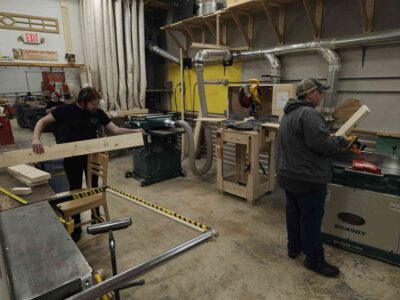
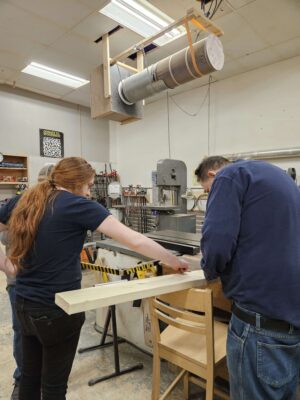
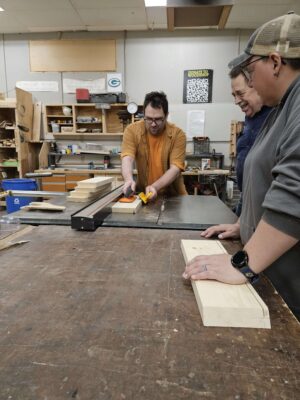
Our friends at Etsy are helping us throwing a little party on Thursday, June 20th, 2013 and you’re invited!

And what is an Etsy Craft Party exactly? Etsy has a blog post that explains it, but basically:

Etsy Craft Party is a one-day celebration of meeting and making. Around the world, we come together to share creative skills with our neighbors. You can organize a Craft Party, or join one in your area. All you need are good friends, craft supplies, and fun!

Well, Hannah Kleinhans is a local Etsy fan here in Milwaukee, and when she needed a place to host the event, we though Milwaukee Makerspace was a natural fit!

You can check out the event on Facebook, and grab a ticket on Eventbrite.

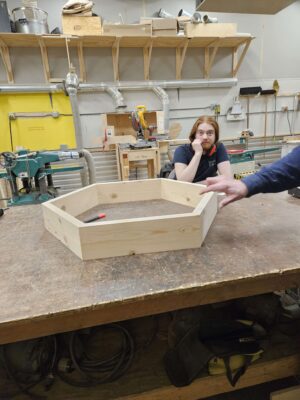
The event is free, but we are asking asking for $5 to help cover the cost of materials, but we’ll do our best to put the tools and skills of our members to work to help out with the making. And what are we making? Well, there are three projects:

Craft Station #1: Little Free Library

Craft Station #2: DIY Wedding Gifts

Craft Station #3: Crafting for our 4 Legged Friends

(Check out Facebook or Eventbrite for full details.)

There’s some FAQs here from Etsy, and if you’ve got a specific question, post a comment or email Hannah at kleinhah[at]gmail.com

Hello Kuka!

Kuka KR 30

We recently got an email from a guy who runs a manufacturing company in the Milwaukee area. He said he had some extra equipment he was looking to donate, including a welder, and some wire, and some scrap steel, and oh yeah, a Kuka KR 30 Industrial Robot!!!

We said, sure, we’ll come and pick it up. ;)

To be fair, he did mention it “needs work” but we’ve already assembled a team of members interested in getting this thing up and running. We’re hoping that with the varied experience our members possess, from electronics to industrial controls to robotics and general hacking and tinkering, we’ll get this thing swinging around in no time.

And what will we do with it? Well, besides the silly suggestions of arm wresting, can crushing, and free high-fives at the next Art Jamboree, there’s been talk of multi-axis milling, 3D printing, and hey, just being awesome with a giant industrial robot arm!

Before we even think of firing it up we’ll be mounting it securely to the floor and building a safety cage. The last thing we want to do is reduce our membership due to an “accident” with the giant industrial robot arm!

Of course, until it’s up and running, it’s available for amusing photo opportunities. ;)

robot002

Weekend Project: Simple rocket launcher

For years I have wanted to make a simple device to launch a model rocket. This Saturday, my son Tim and I built it at the Makerspace. The launcher consists of a project box with some external connectors for the wires that go to the rocket, an arming switch, an LED to signal that the circuit is good, and a launch button. It took about four hours to make including several mistakes and backtracks.

We tested the circuit and it works as planned. The real test will be tomorrow when we attempt to launch some rockets at the park.

IMG_20130615_155201

Weekend Project: Planter Boxes!

Last weekend I made three huge, turquoise planter boxes for my rooftop deck – check out the quarter for scale.  Naturally, help from other Makerspace members was key, as I relied on JackD and his JAMbulence for help transporting two sheets of plywood (Thanks!).  I safely sliced ‘em up on the panel saw, and then glued, screwed and nailed them together.  After applying numerous coats of outdoor latex paint and a bit of sanding, they’re already in use in downtown Milwaukee!

Planter_Box

Weekend Project: Kitchen Shelf

I’ve recently heard that the Milwaukee Makerspace has a reputation for only having members who are electronics enthusiasts. Well, in addition to the metal, wood, beerwater, whisky, fire, arduino, weldingoddaudiocasting, and numerous acoustic projects that I’ve worked on at the Makerspace, I’ve finished a few electronics projects here. My latest Makerspace weekend project is a shelf for my kitchen, pictured here with the Sad Bananaand three legged pig®.

Kitchen Shelf

PPPRS, We’re coming for you!

PPPRS

We’re just a few weeks out from Maker Faire Kansas City and the first official race of the season for the Power Racing Series.

And for those of you that don’t know, the Power Racing Series (typically abbreviated to “PPPRS”) is a challenge to create a working electric vehicle for less than $500 using open source tools and tech. But we use Power Wheels Cars… yeah, the ones designed for little kids. We rebuild them to hold a full-size adult driver (some of us are even, uh “extra large” as it were) and the add in beefy motors, rechargeable batteries, motor controllers, brakes, sometimes trailer hitches and parachutes, and race ‘em.

We complete against other hackerspaces, like our friends at Pumping Station: One, Sector67, and i3Detroit.

This season we hope to have three cars functional for the races. You may have seen some work on Red Lotus recently. While it was one of our main cars last year, it’s probably the slowest car we have right now, of course speed isn’t everything in the Power Racing Series, and who knows, we may have a few tricks up our collective sleeves by the time the race at Maker Faire Detroit rolls around. ;)

Inexpensive Ceramic Shell: Aluminum Casting with Drywall Joint Compound

We’ve been aluminum casting at the Milwaukee Makerspace since November, and I have cast several things since then.  For simplicity, we started by using a lost foam casting method, wherein the form to be cast is fabricated in Owens Corning Foamular 150 (Styrofoam), and is then tightly packed in a reusable, oil bonded sand called petrobond.  The molten aluminum is poured directly on the styrofoam, vaporizing it.  Because the mold is made of sand, the surface texture on the cast aluminum part has the “resolution” of the grain size of the sand.

Ceramic shell is another technique often used in art casting.  The positive of the form to be cast in metal is first created in wax, which is then dipped repeatedly in a silica slurry, that slowly builds up to the desired ½” thickness.  The surface detail reproducible is much smaller/better, as the silica has a much finer “grain size.”  The piece is then put in a kiln to burn out the wax and harden the silica, thereby forming an empty mold.  Typically the mold is cooled, inspected for leaks, patched, and then is buried in regular sand.  Note that to avoid fracturing the mold, it must be heated before pouring.  With all these steps, this process is relatively time consuming and is also somewhat expensive.

Recently, I read a blog post about a quick and low cost ceramic shell alternative that substitutes one or two coats of watered down “Hamiltons White Line Drywall Texture mix” for the tedious ceramic shell process outlined above.  While I couldn’t find that exact product, 4.5 gallon buckets of Sheetrock brand lightweight drywall joint compound (DJC) are omnipresent.  Note that some bags of quick setting drywall joint compound are actually just plaster, and cannot be substituted. I first assembled all the parts needed to make a quick test of the process.  I decided to make some aluminum packing peanuts:

Aluminum_Peanuts_parts

I hot glued the pyramid shaped sprues to the round cup and to the peanuts themselves:

Aluminum_Peanuts_together

I removed half of the 43 Lbs of DJC from the bucket, and poured in 10 lbs of water, taking care to mix it thoroughly with a spiral paint mixer connected to a drill.  Then, I just dipped the whole styrofoam assembly into the bucket, let it dry overnight, and dipped it in a second time.  Immediately after the first dip, I took care to brush the surface of any especially undercut areas, to prevent air bubbles from sticking to the surface.  In the future, I may consider pulling a vacuum on the bucket of DJC to de-gas it.  This may help prevent the formation of air bubbles on the surface of the styrofoam parts.  In addition, I could have first dipped the assembly in surfactant. After two dips, the 1/8” thick shell on the assembly looked like this:

Aluminum_Peanuts_coated

It was a week before the next aluminum pour at the Makerspace, during which time I poured a half ounce of acetone into the mold to dissolve the polystyrene packing peanuts and styrofoam, producing an empty mold.  This step is only necessary when casting packing peanuts, as their polystyrene tends to rapidly expand out of the mold and catch fire, while the pink styrofoam (also polystyrene) is made for homes, and so is much better behaved.  I buried the now-empty DJC mold in ordinary sand, and Matt W fired up the Bret’s furnace, melted a #16 crucible of aluminum, and poured it (Thanks guys!).  After fifteen minutes, I pulled the mold out of the sand, and found the DJC was a little darker.  The act of pulling the mold out of the sand an leaving it to cool over night left it somewhat cracked:

Aluminum_Peanuts_cast

The DJC crumbled off so easily that I didn’t even need a brush.  Also, I noticed that there is more yellowish surface tarnish on pieces left in the DJC to fully cool.  I recommend removing the DJC immediately after the aluminum solidifies.

Aluminum_Peanuts_cleaned

After making a few more, I’m almost ready to safely pack valuables, such as my “Marquis, by Waterford” crystal stemware:

Aluminum_Peanuts_in_use

Finally, check out the phenomenal surface detail that this process can reproduce.  For scale, this peanut is 1.5” long.  The surface texture on the front face is about ~0.002”!

Aluminum_Peanut_closeup

Thanks to Jason G for this last photo.  Also, a big thanks to Dave from buildyouridea.com for letting me know that one or two dips will do it!

Blacksmithing and Casting are here!

A Picture of hooks!

Over the weekend three of our members forged out of steel some great hooks to organize some of our metal casting supplies. Dan, Matt W. and Steve used the blacksmith forge and anvil to create the metal hooks shown here. The hooks were then mounted to a board which was mounted to the wall. Now our metal casting safety clothing along with our lifting tongs and pouring tongs have a neat place to reside!

An image of an anvil with hooks in the background

Quick and Dirty Rain Barrel Stand

So we have two rain barrels on either side of the house that work fantastically well for gathering water to be used for our small victory garden. The only problem with the barrels was that they were too close to the ground so the head pressure wasn’t all that great and it was a pain to get hose attachments on and off. So with some scrap wood I had lying around and gratuitous thievery of the design from this site I built one that would put the barrel up about 3 feet or so.

So the first thing was to take the 4×4′s that were going to form up the legs and cut them all the same length.


Second we want to frame up the legs. The boards I used were a bit sketchy, but with the amount of reinforcement we are putting on it’ll be ok.


The bottom braces are important as they square the legs up to the frame and keep things from shifting. I raised them about a 2×4′s width off the ground so they wouldn’t draw in water off the ground if the legs sunk a bit. 50 gallons is about 400 lbs, so while it might want to sink, I’m also putting this thing on pavers to keep it from sinking / drawing water up into the 4×4′s.

Internal cross members get screwed in from the outside, with the far ends getting screwed to the 4×4′s as well. These are about the width of a 2×4 apart as well, I fudged a little in the middle since it wasn’t exact. This aint rocket science.


I put the barrel on some additional 2×4′s – the original designed called for the barrel to be inside the lip of the 2×6′s to keep it from sliding off but for me that made the nozzle come awefully close to the lip which would have made screwing on the drip line for the plants a pain. When it was on a wood pallet previously it didn’t move an inch.

Tall Tape Dispenser

tape2

We use a lot of blue tape, and people tend to leave the roll wherever they last used it. If it gets buried under something else, it can be hard to find.

It occurred to me that if we had a tall tape dispenser, it couldn’t get buried, and it would be easier to find, so I built one.

It doesn’t have a cutter yet, but I’m not sure it needs one.